The Safety Case for Proper Railway Clothing on Trackside Duties
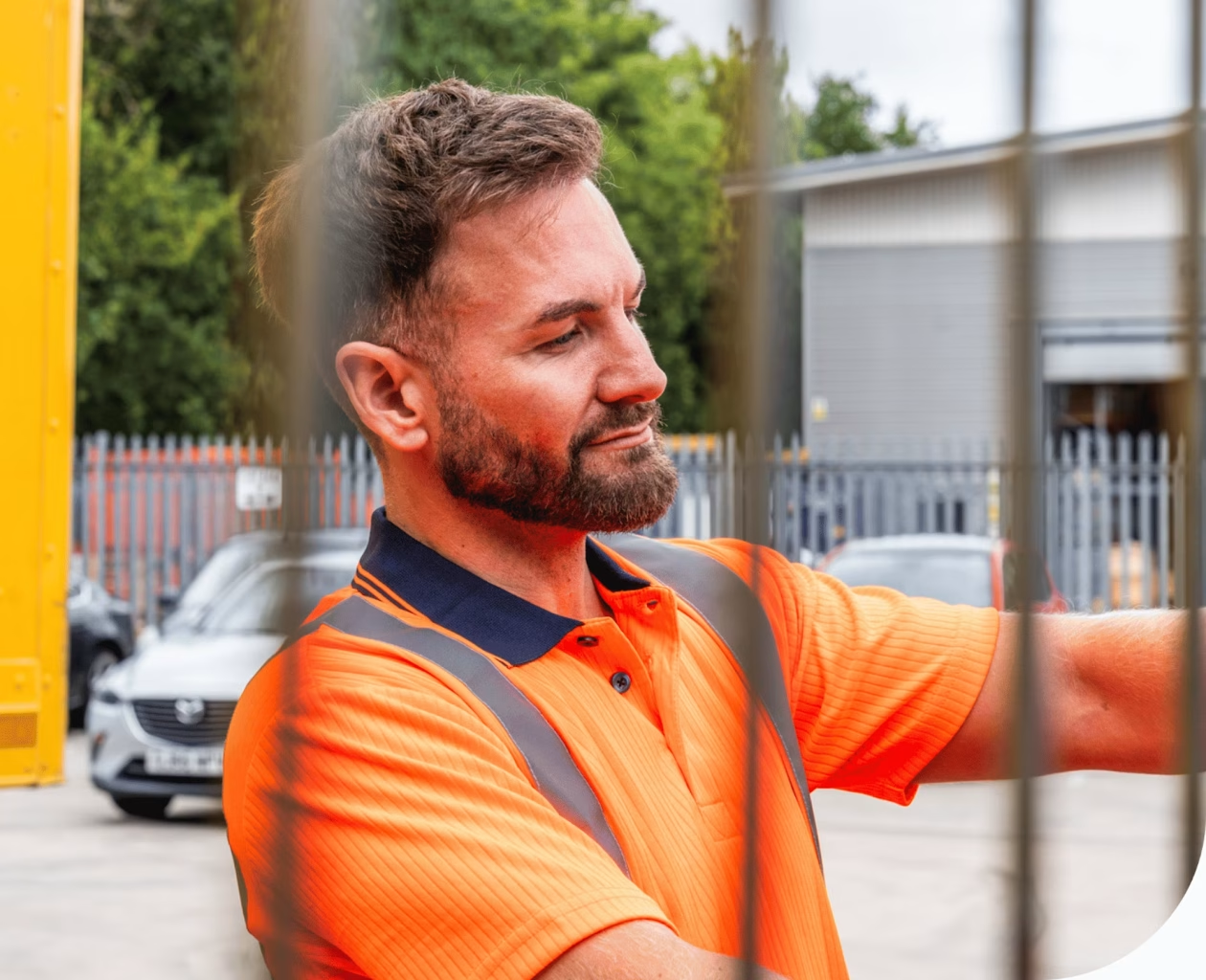
The physical demands of the job, such as lifting, maintaining, repairing, or inspecting equipment, are frequently conjured up when individuals consider working on railway lines. However, one of the most crucial elements in ensuring the safety of rail workers is far less obvious but equally vital as equipment and instruction. It’s the right kind of high-visibility apparel. Wearing the proper railway clothing is a crucial component of safe working practices in the railway setting, where trains can move quickly and line-side hazards may be hard to spot from a distance.
The simple goal of wearing high-visibility clothes is to make it easier for people to see you early, clearly, and consistently. Because of the mix of weight, speed, and short stopping distances, the stakes are higher on railroads than in many other industries. Conditions can change rapidly, even if everyone on the site is trying their hardest. The outline of a person at the trackside may be obscured by backdrop elements like fence, foliage, ballast, or buildings; the weather may lessen contrast; and lighting may be inadequate. By increasing visibility in a reliable rather than accidental manner, the proper railway clothing is intended to lessen these concerns.
The ability to engage safely with train drivers and other trackside workers is a major reason why railway clothing is crucial. Early detection of individuals and obstacles is crucial for train drivers, who may be in charge of responding to signals and navigating intricate routes. A possibly “late notice” issue can be transformed into a “early notice” situation with the use of high-visibility apparel. The difference between a driver being able to change their speed adequately and a near-miss turning into an accident could be that extra time. Wearing apparel that maintains visibility independent of body position is essential since railway work frequently demands employees to move, reposition equipment, or respond to unforeseen situations.
Acknowledgement is also enhanced by proper railway clothing. Being seen is only one aspect of visibility; another is being quickly comprehended. A worker’s silhouette is more visible when they are dressed appropriately, especially when viewed from various perspectives. This clarity is important along the railway line since employees may have to approach or exit the track rapidly, crouch, face trains from an angle, or move between job locations. A visual clue that the wearer is a worker and not a stationary item in various situations can be provided by uniform, well-designed railway clothing. This lessens the possibility of misunderstanding and aids in making wise risk selections.
The fact that railway conditions are always changing is another crucial factor. When a shift starts, it may be daylight, but within hours, vision may be diminished by cloud cover, glare, fog, or darkness. Additionally, the trackside environment has a variety of surfaces, such ballast, which can produce intense, dispersed light, as well as gradients or curves that might distort sightlines. Appropriate high-visibility apparel is designed to function in these shifting circumstances. The visibility elements of railway clothing are more likely to be effective in both natural light and at night, when reflective materials might be crucial, when personnel wear railway clothing that is appropriately specified for rail conditions.
Both luminous and reflective qualities contribute to safety in distinct ways. Fluorescent materials stand out from the background, making them more noticeable in daylight or under specific lighting circumstances. In contrast, reflective components “light up” when exposed to an external light source, like headlights. On a railway track, a worker may be partially hidden by machinery or trackside buildings while external lighting appears from a far-off train approach. Therefore, railway apparel that combines both reflecting and fluorescent qualities can offer greater recognition than apparel that only uses one method. This dual contribution is one of the reasons why proper railway clothing is so important: the objective is to be visible throughout the variety of situations that are likely to occur during train operation, not only at one specific instant.
A human factors component is also present. People can misinterpret relative movement, speed, and distance in difficult situations. A worker standing close to a queue might not be able to completely comprehend how soon a train is approaching, especially if infrastructure, wind, or other sounds are affecting noise levels. In a similar vein, someone who is preoccupied with an activity would not be able to maintain continuous awareness of an impending movement. Although it can make up for times when attention is distracted, railway attire cannot take the place of situational awareness. Improved visibility increases the likelihood of prompt action, which benefits the worker and other members of the safety chain.
For trains to pass on nearby lines as well as for the larger context of trackside movements, appropriate railway clothing is crucial. Rarely do rail projects simply require one task at a time. The workplace may be traversed by maintenance trucks, equipment, or other workers. Colleagues may be entering and departing certain regions, or operational staff may be organising access arrangements. Railway clothing aids in the development of a common visual language in such dynamic environments. It facilitates coordination and lowers the possibility of unintentional interference between work groups because everyone can see each other sooner. Supervisory staff can verify that employees are in the anticipated safety conditions by using clothing made for maximum visibility.
Additionally, it is crucial to remember that “high visibility” is not a single, universal term. Performance is influenced by visible feature type, structure, coverage, and placement. For instance, a worker’s body might not be visible from some angles if their clothing is not sufficiently covered. The clothes may not efficiently catch light if reflective materials are worn or positioned incorrectly. The worker may become less noticeable than intended if the clothes is worn, damaged, or improperly maintained. Because of this, it’s important to wear the right kind of railway clothing; the style shouldn’t just be suitable for general construction or visibility in traffic.
The safety value includes upkeep and appropriate use. The same level of visibility won’t be provided by clothing that has been improperly washed, stretched by excessive wear, or stored in a way that harms reflective surfaces. In a similar vein, neglecting fit might impair efficacy. When a worker bends or moves, an excessively loose garment may move or cover up reflective portions. It may limit movement if it is overly tight, which could be uncomfortable and possibly result in distracted behaviour. The right railway clothing should be appropriate for the job at hand, allowing for safe movement while preserving visibility in the designated places.
The requirement for proper railway clothing is further emphasised by weather and contamination. The clarity of colours and the reflective response of materials can be diminished by damp circumstances, dust, grease, and muck. Compared to office settings, trackside employment can be untidy and clothes can get dirty more quickly. Railway clothing provides more dependable visibility throughout the day when it is selected for rail-specific conditions and is well maintained. Neglecting clothes can make it less protective, which defeats the purpose of wearing it in the first place.
Last but not least, wearing railway clothing is a commitment to consistent safety, not just personal protection. Systems, protocols, and disciplined conduct are the foundation of railway operations. One aspect of that discipline is dressing appropriately for great visibility. It makes it possible for every employee to consistently contribute to the safety picture, which is visible to drivers, coworkers, and everybody else who shares the working environment. The overall risk profile improves when individuals are aware of what to expect visually at the trackside.
The key takeaway is that working close to live trains requires more than just good intentions. One of the few things that an employee may actively control in the railway environment is visibility. Early detection, clearer recognition, and enhanced visual communication are all made possible by selecting and donning the appropriate high-visibility clothing, as well as by using railway clothing appropriately. Both the worker wearing it and everyone around them benefit from increased safety. Railway clothing is crucial because it transforms “I was there” into “I was seen in time” in a workplace where speed, distance, and unpredictability are constant.