After the Foam Is Gone: What a Spray Foam Removal Certificate Tells You
Spray foam insulation was previously marketed as a contemporary and effective method to enhance a home’s thermal performance. Applied to the underside of roof tiles or slates, it expands to fill gaps and solidifies into a durable layer. In reality, it has created significant challenges for numerous homeowners. Mortgage lenders are increasingly cautious about properties that feature spray foam in the roof space. Surveyors frequently highlight this issue, and some homeowners have found that it can hide defects or lead to moisture-related problems. Consequently, numerous individuals are now making arrangements for its removal. However, the removal itself constitutes only part of the narrative. Once the work is completed, the document that verifies what was accomplished, how it was carried out, and the condition in which the roof timbers were left is equally significant. That document is the spray foam removal certificate, and recognising its importance can help you avoid significant time, money, and stress.
Reasons Behind the Increasing Trend of Homeowners Removing Spray Foam
To understand the significance of a spray foam removal certificate, it is beneficial to grasp the reasons behind the removal occurring in the first place. Spray foam applied directly to the underside of a roof covering can create a situation where moisture is trapped against timber rafters and battens. Roofs are constructed to allow for ventilation, and when this ventilation is limited, moisture can build up without being detected. As time progresses, this can result in rot, compromising the integrity of the structure and potentially leading to expensive repairs.
The foam complicates the inspection process. A surveyor faces challenges in assessing the condition of timbers concealed beneath a dense, hardened layer. Due to this uncertainty, lenders and insurers frequently regard such properties as posing a higher risk. Some individuals will decline to lend entirely, while others will require proof that the foam has been evaluated or eliminated. For owners looking to sell or remortgage, removal can thus transform into a practical necessity rather than merely a choice.
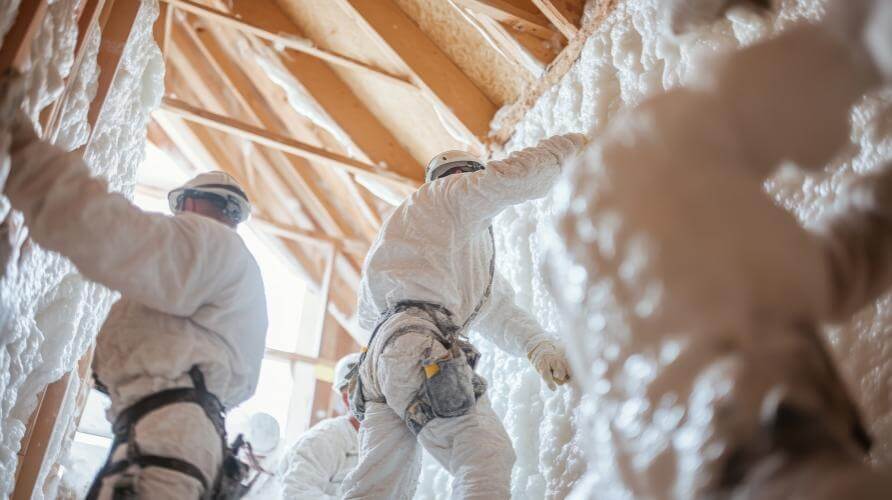
Removing the foam requires specialised expertise. It can be chaotic, labour-intensive, and technically challenging, as the material adheres strongly to the roof structure. After removal, the roof timbers can be thoroughly examined, treated if needed, and insulated using a more appropriate method where applicable. This is the moment when proper documentation becomes crucial.
What a Spray Foam Removal Certificate Is
A spray foam removal certificate is an official document provided by the contractor upon the completion of the work. It verifies that the foam has been eliminated from the designated sections of the property and typically outlines the technique employed, the scope of the work, and the state of the underlying roof structure. A comprehensive certificate may also encompass dated photographs, notes regarding any timber treatment or repairs, specifics of the waste disposal arrangements, and a statement addressing any lingering concerns or recommendations.
Consider it a combination of a receipt, a report, and a guarantee all in one. It does not merely state that a task was completed. It offers proof that can be presented to others interested in your property, such as buyers, solicitors, surveyors, lenders, and insurers. Without it, you are left depending on your own word and possibly an invoice, neither of which holds much significance when a professional needs to be appeased.
Assurance for Purchasers and Their Consultants
If you plan to sell your home, the significance of a spray foam removal certificate becomes clear quite rapidly. Buyers are becoming more conscious of the issues related to spray foam, and their surveyors typically check for it during a roof space inspection. If the foam has been removed, the buyer will understandably seek verification. A clear certificate addresses their enquiries immediately and can avert any delays in the deal.
Solicitors representing a buyer will enquire about any renovations or modifications made to the property. A certificate is an essential document that showcases responsible ownership and the upkeep of a home. In its absence, enquiries may extend unnecessarily, leading a hesitant buyer to request a price reduction or potentially withdraw from the deal entirely. Having the certificate prepared from the beginning demonstrates transparency and instills confidence in the transaction for all parties involved.
Satisfying lenders and securing finance
Mortgage lenders determine their decisions by evaluating the value and condition of the property that serves as collateral for the loan. When a valuer identifies spray foam, the lender may perceive the property as carrying a risk that could impact its value. Many will refrain from moving forward until the matter has been addressed to their satisfaction.
A spray foam removal certificate serves as the necessary proof for a lender. It indicates that a skilled contractor has addressed the issue and that the roof structure has undergone subsequent inspection. In numerous instances, this can determine whether a mortgage offer is granted or an application is rejected. If you are considering remortgaging, the certificate can assist you in obtaining more favourable terms, as the lender will perceive a reduced level of risk.
It is important to remember that various lenders have distinct requirements. Some may request an independent report alongside the contractor’s own documentation. Possessing a comprehensive certificate provides any subsequent surveyor with a solid foundation, potentially minimising both the time and expense associated with further inspections.
Insurance provides a sense of security and reassurance.
Insurance is a field where documentation plays a crucial role. Insurers seek to comprehend the state of the property they insure, and the existence of spray foam can affect their assessment of the risk involved. If you have had the foam removed, informing your insurer and providing a spray foam removal certificate can help ensure that your policy accurately reflects the current condition of your home.
There is also a pragmatic aspect to this. If a roof issue occurs in the future and a claim is submitted, an insurer may enquire about the work that has been completed previously. A thorough account of the removal, along with observations on the condition of the timbers at that time, can demonstrate that you acted with due diligence and upheld the property’s maintenance effectively. This can facilitate any future claim and minimise the likelihood of disputes.
A Record of the Roof’s Condition
One of the most significant features of the certificate is the information it provides regarding the roof structure itself. After the foam has been taken away, the contractor is able to view the timbers for the first time in years. They might discover solid wood, yet they could also encounter indications of moisture, deterioration, or insect presence. A quality certificate accurately documents these findings and details any remedial work performed.
This record remains valuable well beyond the completion of the job. If you later commission repairs, new insulation, or a loft conversion, tradespeople and designers can refer to it and grasp the initial context. It also establishes a standard for comparing future inspections. Should a problem arise years later, you will be able to determine whether it was present at the time of removal or developed subsequently, which can be vital in any discussion regarding responsibility.
Responsibility for the Contractor
A spray foam removal certificate ensures that the contractor is held accountable, providing you with an added layer of protection. When a professional documents their findings and the specifics of their work, they are making a formal declaration regarding the quality of their efforts. This promotes elevated standards and provides a tangible reference point if you are dissatisfied with the outcome.
If a dispute arises, such as a disagreement regarding the removal of all the foam or the proper treatment of the timbers, the certificate and its accompanying photographs serve as crucial evidence. Resolving a disagreement is significantly simpler when there is a clear, dated record compared to relying solely on memory and verbal assurances. Any contractor who hesitates to provide adequate documentation should raise concerns.
Adhering to regulations and ensuring proper waste disposal practices
Spray foam that has been removed constitutes waste and requires proper disposal. A comprehensive certificate will often confirm that this was managed according to the relevant regulations, providing you with confidence that the material did not end up in an inappropriate location. As the property owner, it is your duty to ensure that waste generated from your home is managed in accordance with the law, and maintaining documentation serves to show that you exercised due diligence.
Safe working practices are important as well. Removal can involve dust and fumes, and responsible contractors implement measures to safeguard both their own staff and the occupants of the home. Details of these precautions may be documented alongside the certificate, contributing to the comprehensive overview of a professionally managed project.
What to Consider When Evaluating a Quality Certificate
Not every certificate holds the same value, so it’s beneficial to understand what to anticipate. A comprehensive spray foam removal certificate should clearly identify the property, indicate the dates when the work was performed, and specify the areas that were treated. It is essential to detail the process of foam removal, document the state of the timbers, and indicate any additional treatment or repairs needed. Photographs captured before, during, and after the work significantly enhance credibility, along with the contractor’s contact information and a signature verifying the accuracy of the details.
You should obtain the certificate prior to completing your final payment, and it is essential to review it thoroughly to ensure it aligns with what was promised to you. If anything appears unclear or incomplete, please request corrections while the project is still fresh in everyone’s mind.
Ensuring the Security of Your Certificate
Once you have received your certificate, consider it a significant property document. Store a physical copy of your deeds and other records, and ensure a digital copy is kept in a secure location. You might be required to provide it years down the line, possibly by a buyer, a lender, or a surveyor who is unfamiliar with you. Quick access can significantly impact a stressful situation.
Concluding Remarks
Removing spray foam can be a considerable task, both in terms of effort and cost, and it would be unfortunate to forfeit the advantages of that investment due to insufficient documentation. A spray foam removal certificate transforms a finished job into credible evidence. It provides reassurance to buyers, fulfils the requirements of lenders, facilitates insurance agreements, documents the state of your roof, and holds contractors accountable.
If you plan to have spray foam removed, ensure that the certificate is part of the conversation from the outset. Enquire about the contents, verify the expected arrival time, and ensure its safekeeping upon receipt. In a property market where evidence holds significant weight, a meticulously prepared spray foam removal certificate is essential, not merely an optional extra. It represents the crucial, concluding phase that finalises the project and safeguards your home for years to come.
Get in Touch:
Countrywide Roofing & Insulation
1st Floor, Colonnade House, 2 Westover Rd, Bournemouth BH1 2BY, United Kingdom
01202 942777
countrywideinsulation.co.uk