Insulation Materials London: Comparing the Main Types Used in UK Homes
Particularly in the capital, insulation has a significant impact on how pleasant, effective, and economical a building is to operate. When individuals look at insulation materials London, they often deal with a variety of property styles, such as Victorian terraces and Edwardian conversions, as well as post-war apartments and newly constructed residences. Because of this diversity, there isn’t a single insulating solution that works everywhere because every property is different in terms of age, construction, ventilation, and moisture behaviour. In reality, the optimal option relies on the location of heat loss, the building’s construction, and the amount of space available for the insulating layer.
Performance, thickness, breathability, and appropriateness for the type of structure are frequently the primary distinctions between insulation materials London properties. While certain materials are intended for solid walls, floors, roofs, or hollow walls, others are better suited for lofts. Where room is restricted, a thin high-performance board would be perfect, but in a loft or in between joists, a softer blanket might be more useful. The incorrect material can lead to damp problems, particularly in older homes, if it retains moisture or hinders the wall’s ability to dry. Because of this, discussions on insulation materials London should always start with the property rather than just the product.
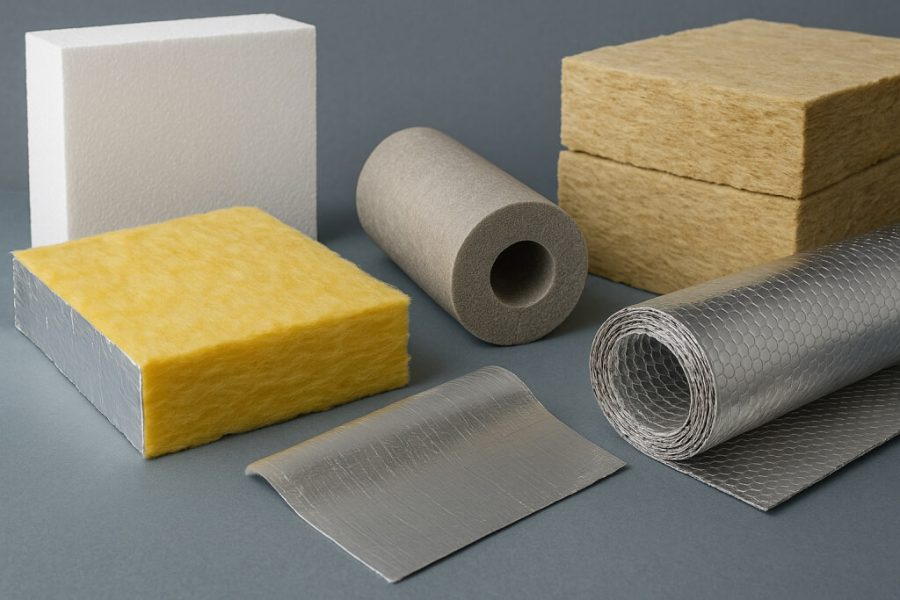
Due to its adaptability and ease of installation, mineral wool continues to be one of the most popular solutions for insulation in UK houses and across all insulation materials London. It is frequently utilised in stud walls, lofts, and the spaces between floor joists. Because of its adaptability, it may be helpful in irregular places. It also has advantages in terms of sound attenuation, which might be important in crowded metropolitan settings. Mineral wool is frequently used in London houses with pre-existing timber structures since it may be installed without requiring significant structural modification. Although it is not the thinnest choice, it is reliable and useful for many common household uses.
at particular, where excellent thermal performance is required at a shallow depth, rigid foam boards are a significant category among insulation materials London. These boards are frequently utilised for flooring, warm roofs, cavity applications, and solid wall insulation. Their primary benefit is that they may provide high insulation values without taking up a lot of room, which is helpful in London residences where every millimetre counts. When a homeowner wants to increase efficiency without sacrificing too much interior space, they are frequently chosen for renovation projects. They must be installed carefully, though, since improper fitting might result in gaps that lower performance.
Additionally, expanded polystyrene may be found in insulation materials London, notably in hollow wall systems and under floors. It is useful for some tasks since it is lightweight, reasonably priced, and manageable. Because of its affordability rather than its superior performance, it is frequently selected in situations with limited budgets. It may significantly increase heat retention in appropriate structures, but it’s not always the greatest option. It must be carefully evaluated in London’s older housing stock since different materials could be better suitable given the wall structure and moisture conditions.
When space is at a premium and thermal efficiency is crucial, polyisocyanurate boards are often used. When a property requires a robust insulating layer without a significant build-up depth, this sort of insulation materials London is frequently utilised. Because of this, it may be used for loft conversions, interior wall improvements, and some floor renovations. It is frequently selected in buildings where a significant energy boost is required but there isn’t enough space for thicker materials. Because it might be more expensive than more straightforward insulation kinds, it is typically utilised in situations where performance is more crucial than cheap initial cost.
When it comes to insulation materials London, natural materials are also becoming more and more popular, especially for older or historic buildings. For structures that need to release vapour rather than contain it, materials like wood fibre, sheep’s wool, and cork can provide superior breathability and moisture control. There are many historic properties in London, and they frequently benefit from insulation that complements the structure rather than working against it. As urban temperatures rise, natural materials may also assist prevent summer overheating. Homeowners that desire a more eco-friendly and breathable option frequently choose them.
Another choice for some insulation materials London projects is cellulose insulation, especially for wall cavities and lofts. It functions effectively when erected correctly and is often constructed from recycled paper materials that have been treated for fire resistance. Its usefulness in retrofit work stems from its flexibility to fit around difficult forms and uneven areas. Although installation must be done carefully to prevent settling or gaps, it may be a powerful option for enhancing thermal comfort in older homes. It functions best when correctly suited to the structure it is being installed into, just like many insulation materials.
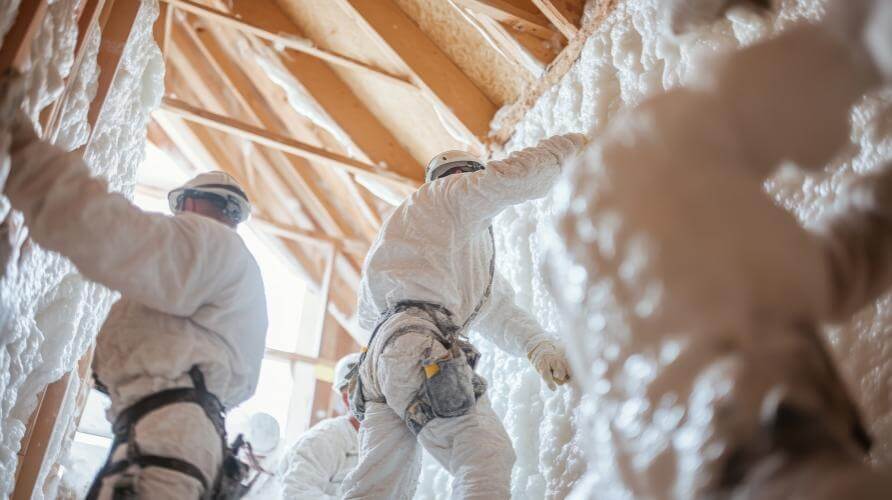
One of the most contentious insulation materials London residents can encounter is spray foam. It works well in difficult roof spaces or irregularly shaped sections and can produce an airtight seal. It provides good covering and successfully lowers draughts in certain circumstances. It is not appropriate for all types of roofs or properties, though, and it must be applied carefully. Spray foam should only be chosen after a thorough evaluation since it may have an impact on roof ventilation and future maintenance access in London, where many properties are older and more intricately constructed.
Which insulation materials London should choose is sometimes determined by the age of the home. In contrast to subsequent homes, Victorian and Edwardian residences often have solid walls, which means they lack a void to fill. In some properties, permeable natural materials, exterior wall insulation, or internal wall insulation could be more suitable. In contrast, mineral wool, cavity fill, or stiff boards are more practicable in mid-century and contemporary homes since they are more likely to have cavities or better-defined roof areas. Because of this, the same material may be perfect for one London house but inappropriate for another.
When comparing insulation materials London, moisture control is another important element. Damp concerns can be caused by patch repairs, obstructed ventilation, and prior modifications in a densely populated region with ancient brickwork. Overly impermeable insulation can exacerbate these problems by preventing walls from naturally drying. For this reason, high-performance boards could be better for newer or more regulated construction types, whereas breathable materials are frequently selected in historic homes. A decent insulation option should increase warmth without causing unanticipated issues down the road.
Space and cost play a major role in the choice. Thermal performance must be balanced with pragmatic considerations such room size, accessibility, and cost in many insulation materials London projects. Because losing floor or wall depth is a major concern, a homeowner in a small apartment could prefer a thinner, more effective board. A less expensive blanket or quilt material could be sufficient to make a significant difference in a bigger home with a loft. The greatest option is frequently the one that best fits the structure and the intended function rather than the most expensive or sophisticated product.
Beyond energy savings, there is also a comfort advantage. Draughts, cold spots, and heat loss via walls, roofs, and floors may all be reduced by carefully selecting insulation materials London. As a result, a house feels more consistently heated and less dependent on continuous heating. Improving daily comfort may be just as significant as lowering expenses in a city like London, where many people reside in homes that were never built to current thermal requirements. Quieter living may also be supported by good insulation, particularly when materials with sound-reducing properties are utilised.
Building type, moisture behaviour, available space, and thermal aim are the most important factors to consider when comparing insulation materials London. London’s housing stock is too diverse for a one-size-fits-all strategy, and no one material is ideal for every house. Natural fibres, cellulose, polystyrene, mineral wool, stiff boards, and spray foam all have unique advantages and disadvantages. Only when carefully chosen can a well-matched insulation option increase warmth, reduce energy waste, and safeguard the building’s structure. The ideal material is one that matches both the property and the budget, especially for homes in London.