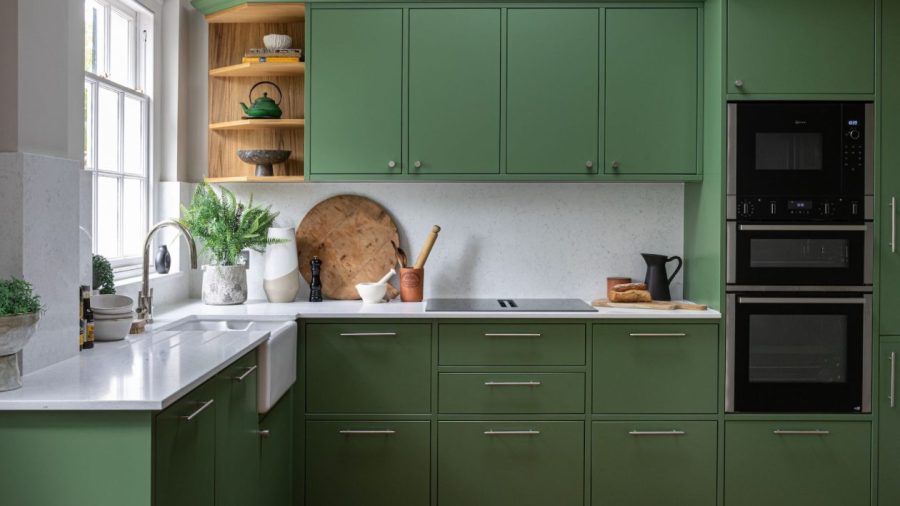
Kitchen Door Painting: Finding a Reliable Professional Service
Updating the appearance of your kitchen without the inconvenience and expense of a complete replacement can be achieved by painting your kitchen cupboard doors. Nevertheless, the process of achieving a professional, durable, and smooth finish is not as straightforward as applying a few applications of paint. Since kitchen doors are subjected to heat, moisture, grease, steam, and regular handling, the products and preparation used must be appropriate for a demanding environment.
Decisions regarding kitchen door painting necessitate careful consideration. Brush marks, peeling, uneven colour, or visible damage beneath the paint may be indicative of a substandard finish. By spending the necessary time to compare local services, inspect previous work, and ask the appropriate questions, you can increase the likelihood of obtaining a kitchen door painting result that is both visually appealing and performs well.
Comprehend the Service’s Scope
It is beneficial to comprehend the typical scope of professional kitchen door painting prior to reaching out to any companies. A service that is dependable should not be limited to painting directly over the existing surface. Before the finishing coats are applied, the cupboard doors may require removal, labelling, cleaning, degreasing, lightly sanding, repair, and priming.
The precise process will be contingent upon the material and condition of the doors. Different preparation techniques may be necessary for surfaces that have been previously painted, foil-wrapped, MDF, or timber. A company that offers kitchen door painting services should be prepared to provide a detailed explanation of the process it will use to evaluate and address the specific cupboard doors in question.
Enquire as to whether the doors are painted on-site or transported to a specialised workshop. Both methods are viable; however, a controlled workshop environment may facilitate the reduction of dust, the regulation of temperature and humidity, and the application of a consistent finish. In situations where it is challenging to remove the doors, on-site work may be more convenient. However, it is important to ensure that the company will protect the remainder of the kitchen and your home.
Additionally, verify whether the price encompasses handles, hinges, plinths, end panels, and other exposed components. A quote that exclusively addresses the primary entrances may not deliver the comprehensive transformation you anticipate.
Conduct research on local businesses.
Searching for companies that specialise in kitchen door painting is a beneficial starting point, as opposed to general decorators who occasionally perform this type of work. While specialist experience does not necessarily guarantee quality, it can suggest that the company has a comprehensive understanding of the preparation, equipment, and coatings necessary for cupboard doors.
Search for organisations that provide transparent information regarding their services and maintain a professional demeanour when responding to enquiries. The phases of kitchen door painting, the surfaces they work with, and the available options for colours and finishes should be elucidated in the written descriptions. Before proceeding, it may be necessary to enquire further about vague descriptions or unusually limited information.
Reviews can also assist in the identification of recurring strengths or concerns. Do not concentrate solely on the aggregate rating. Carefully examine the comments to determine whether customers have expressed satisfaction with the finish’s durability, cleanliness, punctuality, and attention to detail. Reviews that provide a detailed account of the process may be more beneficial than brief comments that only offer general praise.
Personal recommendations can also be beneficial, especially if you have personally observed the completed kitchen. Enquire with friends, family, or neighbours regarding whether the company fulfilled its obligations and whether any complications occurred subsequent to the project’s conclusion.
Inspect Prior Work
Although photographs of completed projects can be beneficial evidence, they should be evaluated meticulously. Seek images that provide a close-up of the corners, borders, mouldings, grooves, and areas surrounding the hinges. These details can indicate whether the paint has been applied uniformly and whether the company has paid attention to the challenging areas of the doors.
In general, a kitchen door painting finish of superior quality should be uniform throughout the entire surface. The pigment should be uniform, devoid of any visible brush marks, raised dust, heavy patches, or runs. The coating should not be excessively dense around corners or recesses, and the edges should appear neat.
It is beneficial to enquire whether the photographs represent the company’s own work. You may also request references from recent customers or request to view examples of doors that are made of a material and finish that are similar to your own. Relevant examples are particularly beneficial, as a company may achieve a satisfactory outcome with timber doors but lack experience with laminate or previously wrapped doors.
Before accepting the assignment, it is advisable to examine a sample board or painted door, if feasible. This can assist you in more accurately evaluating the texture, sheen, and hue than a digital image. It also provides an opportunity to debate whether you prefer a traditional satin finish, a flatter contemporary appearance, or another suitable option.
Question Regarding Preparation
Preparation is a critical phase of the kitchen door painting process. Even when they appear spotless, cupboard doors frequently accumulate cooking oils, polish residue, and general dirt. The primer and paint may not bond effectively if these contaminants are not removed properly.
Enquire about the company’s process for prepping doors prior to painting. The process may involve the following steps: the application of a primer suitable for the surface, the filling of dents and scratches, the repair of chipped edges, the sanding of the existing coating, and the cleansing with a suitable degreaser. The discussion of any repairs should occur prior to the commencement of work, as the application of paint may not eliminate significant damage or delamination.
Determine whether the doors have been detached from their hinges and whether each door and drawer front is labelled. Proper labelling guarantees that all items are returned to their original locations. It also enables the company to paint the doors more extensively, including areas that would be challenging to access while they are still in place.
It is advisable to exercise caution when a company guarantees a rapid service without providing a detailed explanation of the preparation process. Cleaning, sanding, priming, and sufficient drying time should not be sacrificed in order to achieve a rapid turnaround for certain undertakings.
Examine the Equipment and Products
The final finish’s durability and appearance can be significantly influenced by the products employed for kitchen door painting. Enquire about the coating that the company recommends and the rationale behind its suitability for cupboard doors. The response should consider the existing surface, moisture, cleansing requirements, and frequent contact.
Professional spraying equipment can frequently produce a smoother finish than traditional brushing or rolling, particularly on modern cabinet styles and flat doors. Nevertheless, spraying necessitates meticulous preparation and precise application. Inadequate workspace management may result in overspray, uneven coverage, or roughness.
A company must be capable of elucidating the methods it employs to manage dust and safeguard adjacent surfaces during the working process. This is particularly critical when painting is conducted within the confines of your residence. Doors should be permitted to dry and cure for the duration specified for the coating. Despite the fact that painted surfaces may appear to be dry rapidly, they may continue to be susceptible to damage or markings until the coating has completely hardened.
Enquire as to whether the organisation offers assistance in utilising the kitchen following the completion of the project. It may be necessary to exercise caution when handling doors, refrain from using aggressive cleaning products, and delay the process of refitting handles or washing surfaces.
Contrast Comprehensive Estimates
Comparing services in an equitable manner can be facilitated by obtaining multiple written quotations. The least expensive alternative may not be the most advantageous if it fails to incorporate critical preparation, repairs, or additional components. Simultaneously, the most costly quote is not necessarily the most dependable.
The number and type of doors, the surfaces to be painted, the preparation included, the finish selected, and any additional work should be specified in each quotation. Additionally, it should specify whether the price encompasses removal, transport, refitting, and cleansing.
Enquire about potential additional fees. For instance, if extensive repair is necessary for damaged doors, if specific materials necessitate specialist treatment, or if you elect to include panels following the initial assessment, there may be additional costs. These potentialities can be comprehended in advance to prevent future disputes.
An estimated timeframe and payment terms should also be included in the quotation. Especially if the company is unable to provide clear written details of the work, be cautious of requests for a substantial payment before any assessment has taken place. A professional service should provide you with an abundance of information to enable you to make an informed decision.
Evaluate Professionalism and Communication
What to anticipate during the project can be determined by the manner in which a company responds to your initial inquiry. A kitchen door painting company that is dependable should provide a clear response, enquire about pertinent matters, and provide an explanation of the subsequent steps. If the condition or material of your doors cannot be accurately assessed from photographs, it should be willing to coordinate an assessment.
Pay close attention to whether the company is attentive to your priorities during discussions. You may be particularly concerned about the treatment of a damaged surface, a close deadline, minimal disruption, or colour matching. Rather than providing a generic solution that may not be appropriate for your kitchen, a reputable provider should recognise these requirements.
Punctuality, written communication, and respect for your residence are also components of professionalism. In the event that work is performed on-site, enquire about the company’s approach to dust management, ventilation, access, and the protection of nearby furniture and floors. Achieving clear communication prior to the commencement of the project can mitigate confusion regarding the duration of the kitchen’s unavailability and the contents that are included.
It is important that you are at ease with asking enquiries. Consider this a warning sign if a company becomes evasive when discussing preparation, products, guarantees, or previous work.
Aftercare and Guarantees Should Be Taken into Account
Enquire as to whether the company offers a written guarantee for its kitchen door painting service and the specifics of the guarantee. It may pertain to adhesion, workmanship, or defects that manifest within a designated timeframe. Ensure that you comprehend any exclusions, as damage caused by excessive moisture, unsuitable cleaning products, or impact may not be covered.
Advice regarding postoperative care is equally critical. It is recommended that painted cupboard doors be cleansed with gentle products and a soft cloth, rather than abrasive sponges or harsh chemicals. Particularly in the vicinity of basins, dishwashers, and cooking areas, it is imperative to eliminate surplus moisture.
The company is responsible for providing instructions on how to address any issues that may arise following the refit of the doors. A minor issue may be resolved with a simple touch-up, whereas flaking or poor adhesion may indicate that the surface was not properly prepared. Having the quotation, correspondence, and guarantee details on hand will be beneficial in the event that you need to address a concern.
Determine Your Final Choice
After conducting a comparison of companies, refrain from making a decision solely based on price. The quality of prior work, the preparatory process, the coatings employed, the company’s communication, and the clarity of the quotation should all be taken into account. A slightly higher price may be justified if it is accompanied by a higher level of service and a more comprehensive preparation.
Evaluate whether the organisation’s assurances are plausible. A reputable provider will provide a detailed explanation of the potential outcomes, acknowledge any constraints, and refrain from ensuring that all imperfections will be resolved. It is preferable to make an honest assessment rather than an unrealistic claim, as existing damage, uneven construction, or low-quality materials may still be faintly visible after painting.
A kitchen door painting company that integrates technical expertise, meticulous craftsmanship, and reliable communication is the most effective. You can select a service that provides a finish that is suitable for everyday use while also refreshing the appearance of your kitchen doors by conducting research on local providers, inspecting relevant examples, asking detailed questions, and comparing complete quotations.